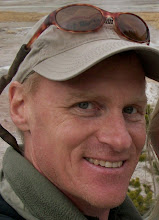
“It. Was. So. Much. Fun.” That was the first response – with an emphatic, whimsical pause between each word – when I asked runners what the Boston Marathon was like. I started asking about two years ago, before I had fully dedicated myself to the months of preparation ahead. I wanted to know what one of the most prestigious, challenging and demanding marathon courses in the world had in store for me.
I expected to hear about the hills on the course (the most famous one isn’t called “Heartbreak” for nothing). I expected to hear about how much their legs hurt after enduring the race. I expected to hear about how terrible training through a Montana winter to be race-ready in April would be.
But no.
The initial and immediate response from the Boston veterans uplifted and encouraged me.
When I finally participated in the 2012 Boston Marathon, my legs screamed in pain because the hills were brutal, and the withering heat near 90 degrees made me wilt, and I ran my worst race since junior high.
And yet when people started asking me how the race went, I found myself echoing that happy first response. Running through the midst of a 26.2 mile tailgate party, with thousands upon thousands of people cheering and encouraging you on, mile after mile, affects you like that. I think if I had smelled even a whiff of negativity when I first starting asking about Boston, I would have given up on the marathon idea, and therefore, would have missed out on pure joy, in spite of all the difficulties.
It probably shouldn’t be surprising, then, that Jesus did not mention the potential troubles, pain, and suffering the disciples could be in for when He first asked them to follow Him. After all their time together, Jesus did not say “In this world you will have trouble” until His last day on earth (John 16:33). Up to that point, I would think the disciples had been a fearful mix of awe, wonder and amazement. But initially, I think “Follow me” probably sounded joyful, playful, and even whimsical, the same way runners told me about Boston.
So the next time I find myself on the verge of discussing my Christian faith, I’m going to try and start with some version of “It. Is. So. Much. Fun.” Because I don’t want someone else to miss out on all the fun.
May 1, 2012
Boston
April 10, 2012
February 25, 2012
"_______"
When my wife was a young girl, she and her little sister were treated to a Saturday night at the drive-in theater. Popcorn. Giggling. A good wholesome time during a family-oriented film, the first of a double feature. During intermission, the parents informed the girls it was time to go to sleep. Their movie was over, and it was time for mommy and daddy’s movie.
Worn out from the excitement and late hour, her sister conked out before the second movie started. However, my future wife sat in the back seat, quiet, patient and supposedly asleep, while the adults became engrossed in the story, oblivious to the small sponge behind them.
The very next day, a teacher intercepted my future mother-in-law at the classroom doorway as she came to pick up her daughter. The teacher looked horrified; her eyes wide with shock as she pulled my future mother-in-law aside. The teacher leaned in nervously. “I’m not sure how to tell you this,” she whispered incredulously, “but Kristin said ‘______.’”
In front of the teacher.
For all the other kids to hear.
During Sunday School.
Probably made for some interesting discussions around town later that day, when unsuspecting parents innocently asked, “So, what did you learn at Sunday School today?”
When religious leaders arrested Peter and John for preaching about Jesus’s resurrection, they stated, “We cannot help speaking about what we have seen and heard” (Acts 4:20).
And neither can we.
We all repeat and tell other people about the things that influence us, good or bad. What we expose ourselves to sways our hearts, minds and opinions, which in turn, drives what we talk about. Peter and John spoke about the miracles, healings, love and good news they were exposed to by hanging around Jesus. But as Kristin’s parents discovered, the flip side occurs when “bad company corrupts good character” (1 Corinthians 15:33), and bad company can take the form of people, books, music, TV shows, jokes, magazines, websites, and of course, movies.
Even if she had no idea what the word meant, little Kristin could not help speaking about what she had seen and heard, repeating at least one word from the movie with adult language and situations, and reflecting it back out for the world to hear. But she was unknowingly exposed to some things that apparently turned out to not be appropriate for her age. As adults, however, we have a choice about who and what approaches our eyes and ears.
If we are not careful, at the most inappropriate time, we might end up saying “______.”
Worn out from the excitement and late hour, her sister conked out before the second movie started. However, my future wife sat in the back seat, quiet, patient and supposedly asleep, while the adults became engrossed in the story, oblivious to the small sponge behind them.
The very next day, a teacher intercepted my future mother-in-law at the classroom doorway as she came to pick up her daughter. The teacher looked horrified; her eyes wide with shock as she pulled my future mother-in-law aside. The teacher leaned in nervously. “I’m not sure how to tell you this,” she whispered incredulously, “but Kristin said ‘______.’”
In front of the teacher.
For all the other kids to hear.
During Sunday School.
Probably made for some interesting discussions around town later that day, when unsuspecting parents innocently asked, “So, what did you learn at Sunday School today?”
When religious leaders arrested Peter and John for preaching about Jesus’s resurrection, they stated, “We cannot help speaking about what we have seen and heard” (Acts 4:20).
And neither can we.
We all repeat and tell other people about the things that influence us, good or bad. What we expose ourselves to sways our hearts, minds and opinions, which in turn, drives what we talk about. Peter and John spoke about the miracles, healings, love and good news they were exposed to by hanging around Jesus. But as Kristin’s parents discovered, the flip side occurs when “bad company corrupts good character” (1 Corinthians 15:33), and bad company can take the form of people, books, music, TV shows, jokes, magazines, websites, and of course, movies.
Even if she had no idea what the word meant, little Kristin could not help speaking about what she had seen and heard, repeating at least one word from the movie with adult language and situations, and reflecting it back out for the world to hear. But she was unknowingly exposed to some things that apparently turned out to not be appropriate for her age. As adults, however, we have a choice about who and what approaches our eyes and ears.
If we are not careful, at the most inappropriate time, we might end up saying “______.”
January 24, 2012
Sour Cream
The sour cream never had a chance. Never knew what hit it. Innocently it waited in my refrigerator for the next potato- or nacho-based meal, which as a bachelor happened frequently.
This particular day, I staggered into my apartment after running 22 miles while training for my first marathon. Drenched with sweat, vision blurred and legs wobbling, I lurched toward the kitchen, ravenous after burning so much energy. Flinging open the door to the fridge, several tumbleweeds blew out, exposing the unsuspecting tub of protein and fat. Hesitating briefly, a small voice of reason pleaded to not make meal out of a condiment. I shrugged, and attacked the sour cream with primal gusto anyway.
Even though I had changed my physical regimen over several months to prepare for running 26.2 miles, I hadn’t changed my eating habits – burgers, fries, fried chicken, and now apparently, a foray into the fattier condiments. No wonder my body always felt so broken down, and I was zombified by the need for sleep.
Call me crazy, but a food-ish product that contains 10% of my suggested daily allowance of saturated fat in a mere 2 tablespoons couldn’t possibly replace all the carbohydrates, potassium, sodium, vitamins and minerals I burned off in mass quantities. And it certainly could not provide me energy for the next training run. So I lost weight and remained sluggish throughout my training. I bonked during the actual race. My legs turned to mush, and I slogged through the last 2 miles like I was shuffling through waist-deep wet cement.
In the second half of 1 Corinthians 10, Paul writes about bad food. Bad because it was sacrificed to idols, not bad because of its fat content. These days, we do not have to worry about whether our food participated in pagan temple rituals. But we should be concerned about what food we put into our bodies, and how it affects our moods, our energy levels, and our focus because it relates to how well and how actively we can serve God.
When speaking of food, Paul said, “Everything is permissible – but not everything is beneficial. Everything is permissible – but not everything is constructive” (1 Corinthians 10:23). The items on my bachelor menu were all readily acceptable to eat, but they were not helpful for me. I hope you do not have a sour-cream-as-a-meal habit, but what other food-ish item(s) are on your regular menu that may not be beneficial for you in the long run?
![]() |
| www.bonappetit.com |
This particular day, I staggered into my apartment after running 22 miles while training for my first marathon. Drenched with sweat, vision blurred and legs wobbling, I lurched toward the kitchen, ravenous after burning so much energy. Flinging open the door to the fridge, several tumbleweeds blew out, exposing the unsuspecting tub of protein and fat. Hesitating briefly, a small voice of reason pleaded to not make meal out of a condiment. I shrugged, and attacked the sour cream with primal gusto anyway.
Even though I had changed my physical regimen over several months to prepare for running 26.2 miles, I hadn’t changed my eating habits – burgers, fries, fried chicken, and now apparently, a foray into the fattier condiments. No wonder my body always felt so broken down, and I was zombified by the need for sleep.
Call me crazy, but a food-ish product that contains 10% of my suggested daily allowance of saturated fat in a mere 2 tablespoons couldn’t possibly replace all the carbohydrates, potassium, sodium, vitamins and minerals I burned off in mass quantities. And it certainly could not provide me energy for the next training run. So I lost weight and remained sluggish throughout my training. I bonked during the actual race. My legs turned to mush, and I slogged through the last 2 miles like I was shuffling through waist-deep wet cement.
In the second half of 1 Corinthians 10, Paul writes about bad food. Bad because it was sacrificed to idols, not bad because of its fat content. These days, we do not have to worry about whether our food participated in pagan temple rituals. But we should be concerned about what food we put into our bodies, and how it affects our moods, our energy levels, and our focus because it relates to how well and how actively we can serve God.
When speaking of food, Paul said, “Everything is permissible – but not everything is beneficial. Everything is permissible – but not everything is constructive” (1 Corinthians 10:23). The items on my bachelor menu were all readily acceptable to eat, but they were not helpful for me. I hope you do not have a sour-cream-as-a-meal habit, but what other food-ish item(s) are on your regular menu that may not be beneficial for you in the long run?
January 5, 2012
Silence
![]() |
| Microsoft clip art |
Yet, even though I spoke with her, I remained silent about The One Thing That Mattered: how I felt about her. And so, I remained trapped in my own, self-constructed solitary confinement of unspoken hopes and dreams.
I drowned in that same silence when I found out she had started dating some guy. Some other guy. Some guy in our typing class, no less, who probably used his superior typing skills to woo her, unlike me who continued to hunt and peck. Some guy who apparently had no problem talking to her on a deeper level, unlike me who kept silent about such things.
So while they started joking and laughing and stealing glances, I ached inside, left to repeatedly wonder “What if I had said . . . ” Every word I failed to speak when I had the chance pressed down like stacked weights on my chest. Her same actions that used to thrill me, now tore me apart. I resembled David’s remarks in Psalm 39, “When I was silent and still, not even saying anything good, my anguish increased” (Psalm 39:2).
By not saying anything of importance or meaningful to her, in effect, I abandoned her ears to let them roam and find something of substance to listen to; something our fellow typist verbalized.
What is The One Thing That Matters to you that is being left unspoken, and to whom? How could your relationship with God, your friends and your family improve if you said something – anything - about how you honestly feel and what you think? During this time of resolutions to start the new year, make it yours to start tearing down the walls of silence.
December 14, 2011
Eye-Catching
My eyes bugged out when I came down the stairs on that particular Christmas morning. The present stood almost as tall as me, and because it was so big and so eye-catching, I was absolutely positive it just had to be the coolest present I had ever gotten or would ever get. My mind raced from one possibility to another about what it could be, and who I would call first to brag about it.
After half-heartedly opening several other gifts and encouraging my mother to hurry with hers, the time finally came to open The Present. Tearing into the wrapping paper, breathless with anticipation, eyes wide with excitement, it was . . .
It was . . .
It was . . .
A long-handled snow shovel.
*Sigh* Gee. Thanks.
Christmas seems like a good time to remember what God considers important is typically upside down from we consider important. That’s why people have such a hard time understanding concepts like love your enemies (Luke 6:27), to be great you’ve got to be a servant (Matthew 20:26), to be first you must be last (Mark 9:35), it’s more blessed to give than to receive (Acts 21:35), rejoice in suffering (Romans 5:3), and so forth.
Therefore, when God gave us all a present on the very first Christmas and sent the long-awaited Messiah and Savior of the world, He was not grandiose, showy and pretentious. The King of King and Lord of Lords was born tiny and helpless into humble, simple beginnings, and rested in an animal’s feeding trough (Luke 2:7). As He grew older, Jesus “had no beauty or majesty to attract us to him, nothing in his appearance that we should desire him” (Isaiah 53:2). In other words, He was easy to overlook. I overlooked a number of much smaller, more meaningful Christmas presents to focus on the big attention-grabbing one, only to be let down.
This Christmas, remember “the gift of God is eternal life through Jesus Christ our Lord” (Romans 6:23). The person that embodied that gift - the most meaningful and precious gift any of us will ever receive - was so unassuming, modest, and unpretentious, that many people overlooked the tiny gift’s significance, and chose to focus on something eye-catching instead.
![]() |
| arthursclipart.org |
My eyes bugged out when I came down the stairs on that particular Christmas morning. The present stood almost as tall as me, and because it was so big and so eye-catching, I was absolutely positive it just had to be the coolest present I had ever gotten or would ever get. My mind raced from one possibility to another about what it could be, and who I would call first to brag about it.
After half-heartedly opening several other gifts and encouraging my mother to hurry with hers, the time finally came to open The Present. Tearing into the wrapping paper, breathless with anticipation, eyes wide with excitement, it was . . .
It was . . .
It was . . .
A long-handled snow shovel.
*Sigh* Gee. Thanks.
Christmas seems like a good time to remember what God considers important is typically upside down from we consider important. That’s why people have such a hard time understanding concepts like love your enemies (Luke 6:27), to be great you’ve got to be a servant (Matthew 20:26), to be first you must be last (Mark 9:35), it’s more blessed to give than to receive (Acts 21:35), rejoice in suffering (Romans 5:3), and so forth.
Therefore, when God gave us all a present on the very first Christmas and sent the long-awaited Messiah and Savior of the world, He was not grandiose, showy and pretentious. The King of King and Lord of Lords was born tiny and helpless into humble, simple beginnings, and rested in an animal’s feeding trough (Luke 2:7). As He grew older, Jesus “had no beauty or majesty to attract us to him, nothing in his appearance that we should desire him” (Isaiah 53:2). In other words, He was easy to overlook. I overlooked a number of much smaller, more meaningful Christmas presents to focus on the big attention-grabbing one, only to be let down.
This Christmas, remember “the gift of God is eternal life through Jesus Christ our Lord” (Romans 6:23). The person that embodied that gift - the most meaningful and precious gift any of us will ever receive - was so unassuming, modest, and unpretentious, that many people overlooked the tiny gift’s significance, and chose to focus on something eye-catching instead.
November 22, 2011
Optimsim
Do you consider the glass half full or half empty? For all the negative news we get pummeled with every day - Earthquakes! Unemployment! Cancer! – you’d think we would tend to be downright pessimistic, focusing on the empty part of the glass. But according to a recent book, The Optimism Bias by Tali Sharot, we humans are actually an optimistic bunch. “The belief that the future will be better than the past or present is known as the optimism bias. It abides in every race, region and socioeconomic bracket.” According to Sharot, a growing body of scientific evidence indicates optimism may be hardwired into all of us.
Which comes in handy when things don’t exactly turn out how we’d like. Just ask anyone who’s had their heart broken, yet dreams of new love anyway. Or the business manager who lost the bid, but starts searching for the next opportunity anyway. Or Cubs fans, because there’s always next year.
Optimism is founded on hope. Hope imagines new opportunities. Hope believes that conditions will improve. Hope drives us forward despite situations that scream out for pessimism.
It is that kind of hope that enabled Paul to confidently state, “We know that in all things God works for the good of those who love him, who have been called according to his purpose” (Romans 8:28). Not just some things. Not the occasional thing. All things. So if hope springs eternal, shouldn’t the source of our hope also be eternal? What keeps driving you forward despite the negativity pressing in on you?
It seems to me Jesus was an optimist, and imparted some of that optimism in each and every one of us, as science is beginning to understand. After all, He did say, “I have come that they may have life and have it to the full” (John 10:10). That makes me think even if the glass appears to be half empty, we can believe it will eventually be full if have faith in Him.
Which comes in handy when things don’t exactly turn out how we’d like. Just ask anyone who’s had their heart broken, yet dreams of new love anyway. Or the business manager who lost the bid, but starts searching for the next opportunity anyway. Or Cubs fans, because there’s always next year.
Optimism is founded on hope. Hope imagines new opportunities. Hope believes that conditions will improve. Hope drives us forward despite situations that scream out for pessimism.
It is that kind of hope that enabled Paul to confidently state, “We know that in all things God works for the good of those who love him, who have been called according to his purpose” (Romans 8:28). Not just some things. Not the occasional thing. All things. So if hope springs eternal, shouldn’t the source of our hope also be eternal? What keeps driving you forward despite the negativity pressing in on you?
It seems to me Jesus was an optimist, and imparted some of that optimism in each and every one of us, as science is beginning to understand. After all, He did say, “I have come that they may have life and have it to the full” (John 10:10). That makes me think even if the glass appears to be half empty, we can believe it will eventually be full if have faith in Him.
Subscribe to:
Posts (Atom)